
Dish guide ·
Daing na Bangus: The Filipino Breakfast Fish, Split and Marinated
Daing na bangus is milkfish butterflied open, marinated in vinegar, garlic and pepper, then fried until the skin crisps. Filipinos eat it at breakfast with garlic rice and a fried egg, and the bones are the only difficult part.
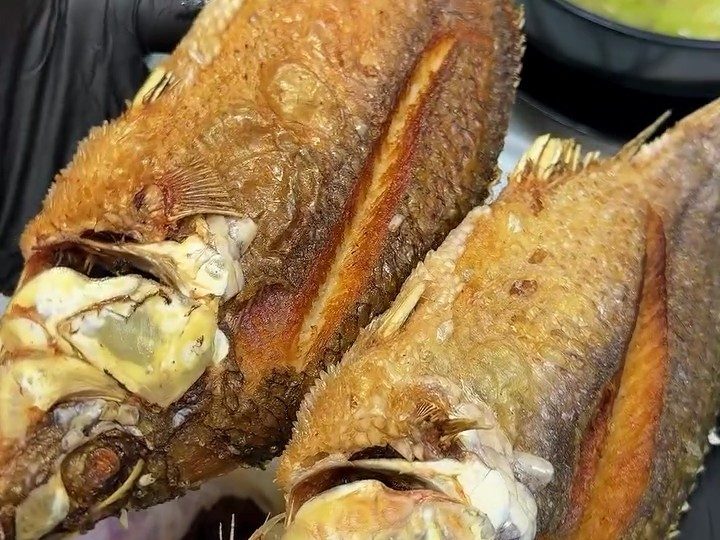
Daing na bangus is milkfish split down the back into one flat piece, marinated in vinegar, crushed garlic and black pepper, then pan fried skin down until the skin blisters and crisps. It is a breakfast dish first and a dinner dish second, and it is on our menu twice: once as a whole fish in the seafood section and once as daingsilog, the breakfast set with garlic rice and egg. At Pinoy Tambayan in Al Barsha 1, Dubai, it is named in nine of our Google reviews.
What daing actually means
Daing describes a preparation, not a fish. To daing something is to split it open, season it, and dry or marinate it so it keeps longer than fresh fish would in a tropical climate. Traditional daing was salted and sun dried for days. The version almost everyone eats now is a short vinegar and garlic marinade, sometimes only a few hours, which borrows the flavour of the old method without the preserving. That is why you will see daing na bangus described both as a dried fish and as a marinated one and both are correct, separated by about a century of refrigeration. The same logic covers the sour and salty end of Filipino cooking generally, from the vinegar in adobo to the fermented pastes on the table.
Bangus is the national fish, and it has a bone problem
Bangus, milkfish, is the national fish of the Philippines and the backbone of Philippine aquaculture. It is farmed in brackish fishponds, grows fast, tastes clean and slightly sweet, and carries a soft, almost creamy belly fat that is the part people fight over. It also has an unusual number of fine intramuscular bones, arranged in rows down the fillet, which is why deboned bangus is sold at a premium in every Philippine supermarket and why butterflying the fish is the standard treatment. Splitting it flat exposes the bone rows and makes them far easier to lift out at the table than they would be in a round fish. Bangus is one of four fish on our menu, and the others are set out in the guide to the seafood section.
Why the marinade is vinegar and not lemon
Cane or coconut vinegar does two jobs here that citrus does not do as well. It firms the flesh without turning it opaque and mushy the way a long citrus cure would, and it carries garlic and pepper into the fish rather than sitting on the surface. The acid also cuts the natural oiliness of milkfish, which is the whole reason a fatty fish reads as light at nine in the morning. Salt goes in with the vinegar, and that combination is what lets the skin crisp properly in the pan: a wet, unsalted fish steams instead of frying. Kitchens vary the time from two hours to overnight, and longer is not automatically better, because past a point the acid starts to cook the flesh and the texture goes chalky.
The two ways it appears on our menu
The whole fish sits in the Lutong Dagat seafood section of the printed menu and is the version to order for a table or for dinner. Daingsilog is the breakfast set, carrying the client's own printed best seller mark, and it is the smaller, faster version with garlic rice and egg already on the plate.
How to get the bones out without giving up
- Work from the split side, not the skin side. The fish is already opened flat, so the bone rows sit exposed along the fillet rather than buried.
- Run a fork down the centre line first. The main row lifts as a strip, and most of the fine bones come with it.
- The belly flap, the fattiest strip along the lower edge, is the section with the fewest bones. It is also the part Filipinos reach for first.
- Eat with your hands if you want the bones found faster. Fingers detect a fine bone that a fork will push straight into a mouthful, and our kamayan guide explains why that is normal here rather than impolite.
- Order it as part of a delivery and reheat it in a dry pan skin down, never in a microwave, or the crisp skin you paid for turns to leather.
Sawsawan: the dipping sauce is half the dish
Fried fish in the Philippines arrives with a sawsawan, a dipping sauce mixed to taste, and refusing it is like eating chips without salt. The standard for daing is spiced vinegar: vinegar with crushed garlic, sliced chilli and a little black pepper. Soy sauce with calamansi, called toyomansi, is the other common choice and it goes salty and citrus rather than sharp. Some people use both on the same plate, one for the flesh and one for the crisp skin. The same spiced vinegar turns up next to grilled chicken inasal, which is a useful thing to know once you start recognising the pattern. There is no correct answer, and the mixing is done by the eater, which is a pattern that repeats all over this cuisine: the kitchen cooks the protein, the table finishes the seasoning.
Why a fried fish is a breakfast food here
Filipino breakfast is savoury, rice based and built around one salty protein, which strikes most visitors as a heavy way to start a day until they have worked a shift on it. The logic is straightforward. Rice is the energy, the salty protein makes the rice interesting, the fried egg adds fat and a soft yolk that acts as a sauce, and the whole plate is designed to hold someone through hours of physical work. In Dubai that logic extends past the morning, because a large part of the Filipino workforce here finishes a shift at a time nobody would call breakfast. We open at 9:00 AM and serve until 1:00 AM, and the case for eating breakfast at midnight is a whole article of its own.
Bangus on the rest of the menu
The same fish appears in two other treatments, and comparing them is a fast way to understand how one ingredient moves across Filipino cooking. Sinigang na bangus puts it in a sour tamarind broth, where the fat balances the acid. Pesang bangus poaches it in a clear ginger broth, which is the gentle, restorative version people cook for someone unwell. Daing is the third route: acid first, then fire. Same fish, three completely different results, which is the argument our sinigang guide makes at greater length about sourness in general.
Ordering it for a group
A whole daing na bangus is a sharing plate in practice, because one flat fish covers a lot of surface area and everyone takes from the middle. For a bigger table it pairs well alongside something with sauce, since the fish itself is dry and crisp by design, and something green. For thirty people and up it is a workable catering line item with one caveat worth stating: crisp skin does not survive an hour in a covered tray, so it should be scheduled near the front of a service rather than held.
Daing na bangus questions we get asked
What is daing na bangus?
Milkfish split flat down the back, marinated in vinegar, garlic and pepper, then fried until the skin crisps. It is most often eaten at breakfast with garlic rice and egg.
What does daing mean?
It describes the preparation: splitting a fish open and curing or marinating it. Traditionally it was salted and sun dried, and the modern version is a short vinegar and garlic marinade.
What is bangus?
Milkfish, the national fish of the Philippines. It is farmed in brackish ponds, tastes clean and slightly sweet, and has a rich belly that is the most prized part.
Does daing na bangus have a lot of bones?
Yes, milkfish carries rows of fine bones. Butterflying it exposes those rows so they lift out in a strip, and the belly section has the fewest.
Is daing na bangus sour?
Mildly. The vinegar seasons and firms the fish rather than pickling it, so you taste garlic and salt more than acidity.
What is the difference between daingsilog and daing na bangus?
Daingsilog is the breakfast set: a portion of the fish plated with garlic rice and a fried egg. The seafood menu row is the whole fish on its own.
What sauce goes with it?
Spiced vinegar with garlic and chilli, or soy sauce with calamansi. Both are mixed to taste at the table rather than poured in the kitchen.
We are opposite Dubai International Academy in Al Barsha 1, open 9:00 AM to 1:00 AM every day, rated 4.5 on Google. Order it at breakfast, or at midnight, whichever your shift allows.
Straight from our Google reviews
“Food is great..i really love their pancit bihon and daing silog..very satisfied on their service..thank you wheng and ferdie for great assistance🥰😊”
“Oustanding customer service from Ate Maria. We’ve tried their sinigang na bangus and it tastes like home. 🥰”
Copied word for word. Read all 558 five-star reviews
More from the Dining Guide
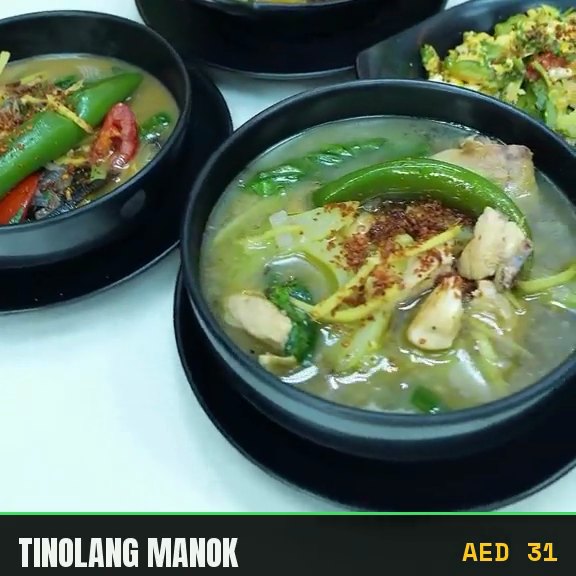 Tinolang Manok: Filipino Ginger Chicken SoupTinolang manok is chicken simmered in a clear broth built on ginger, garlic and onion, with a green vegetable and leaves added at the end. It is AED 31 at Pinoy Tambayan, the cheapest of the nine soup rows on the menu, and the dish Filipino households cook when somebody is unwell.
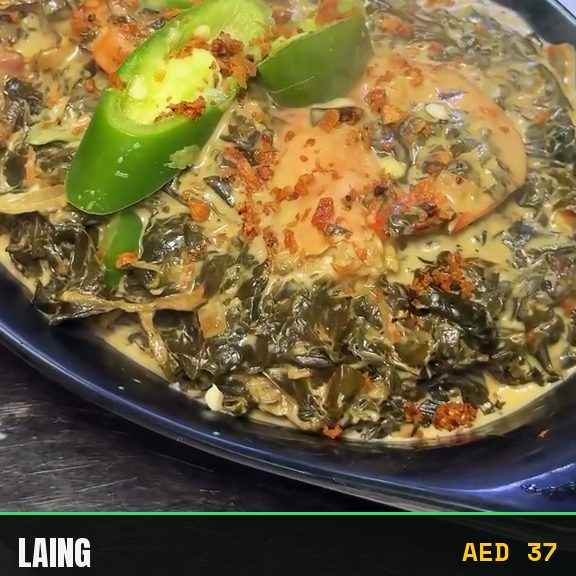 Laing: The Filipino Taro Leaf Dish From BicolLaing is dried taro leaves simmered in coconut milk with chilli and ginger until the sauce thickens, a Bicol dish that costs AED 37 at Pinoy Tambayan. It is one of nine vegetable rows on the menu and one of the few named by diners in their own reviews.
 Filipino Desserts at Pinoy Tambayan: Ube Halaya to Leche FlanPinoy Tambayan keeps six desserts on the printed menu at Al Barsha, from a five-dirham ice cream cone to a nineteen-dirham leche flan, plus halo halo as a seventh on its own guide. Every price and dish name below comes straight off the menu, not a guess.
Hungry now?
Open daily, 9:00 AM to 1:00 AM. No pork is served at Pinoy Tambayan. Free delivery within 5 km, AED 5 beyond, and no minimum order.
Order daing na bangus on WhatsApp +971 4 328 2669 Book a table Get directions