
Dish guide ·
The Seafood Menu: From Cajun Crab to Sinigang na Hipon
Pinoy Tambayan serves thirteen seafood dishes across three sections of the menu, plus a seafood boodle fight in four sizes. This guide maps every one of them and says which to order first.
Lutong Dagat, which translates as cooked from the sea, is the seafood group inside the main dishes at Pinoy Tambayan in Al Barsha 1, Dubai, and it holds seven rows: two Cajun boils, buttered garlic prawns, sauteed mussels, two whole fried fish and a marinated milkfish. Seafood does not stop there. Four of the nine bowls in the Sabaw at Sinigang group are built on fish or prawns, calamari sits with the appetisers, daingsilog sits with the breakfast sets, and the Seafood Boodle Fight is a section of its own in four sizes. Thirteen seafood dishes across three sections of the menu, before you count the boodle.
Why the seafood is scattered and not on one page
Two organising ideas run through our menu at the same time. Some headings are named for an ingredient, Lutong Dagat and Gulay at Iba Pa among them, and some are named for the kind of meal you are sitting down to: a soup, a starter, a breakfast set, a platter for a group. Seafood falls on both sides of that split, which is why it turns up under four headings rather than one. A sour fish soup is filed with the other sour soups, a squid starter with the starters, the breakfast fish with the breakfast sets, and only the fried and sauced rows end up under the seafood name itself. One detail applies across all of them: a main dish already includes one rice, so a seafood main plus rice is one line on the bill, not two.
The first word of the name is the cooking method
Filipino dish names are usually built method first and ingredient second, so once you can read the first word the seafood list stops being a wall of unfamiliar names. Pritong means fried, which makes pritong tilapia and pritong galunggong whole fish taken straight to the pan. Ginisang means sauteed with garlic and onion, which is what happens to tahong, the mussels. Sinigang na means simmered in a sour broth. Daing na means split open flat and marinated in vinegar and garlic before frying, a preserving technique long before it was a flavour, and it has a guide of its own. Buttered garlic and Cajun are the two styles on those rows that carry no Filipino name at all, and both describe a sauce rather than a technique.
Bangus, tanigue, tilapia, galunggong: knowing the fish
Four different fish appear on those rows and they are not interchangeable. Bangus is milkfish, the national fish of the Philippines, farmed rather than caught, soft and slightly sweet, and carrying a famous quantity of fine bones. Tanigue is Spanish mackerel, a large firm fish with dense flesh, and it is the one to reach for if fine bones are what put you off fish. Tilapia is freshwater, mild and easy to farm, which is why it is fried whole across most of Southeast Asia. Galunggong is round scad, a small oily fish so ordinary in the Philippines that the price of it gets quoted as a cost of living measure, and it is eaten whole and crisp with rice and vinegar. Bangus is the only one that repeats: it turns up soured, simmered in ginger, split and fried, and again inside a breakfast set.
Sour, ginger, or neither: the seafood bowls
Sinigang is the sour one and it is the format most people arrive looking for, since fourteen of our Google reviewers name a sinigang when they write about eating here. The prawn version arrives with the prawns still in their shells alongside okra and kangkong in a tamarind broth, and the fish versions are built on bangus or tanigue. The bowl that surprises people is the fourth one in that group. Pesang bangus sits right beside the sinigangs and is not sour at all: it is whole milkfish in a clear ginger broth with green chilli, and it is what to order when you want fish in liquid without the acid. The sour side is worked through properly in the sinigang guide.
Cajun crab and Cajun shrimp: a boil, not a grill
Cajun is a Louisiana seasoning style, heavy on paprika, cayenne, garlic and pepper, and the format that carries it is a boil served in its own sauce rather than anything dry. On our two rows that means crab or prawns arriving under a thick chilli garlic sauce with sweet corn in with them. It is the messiest thing on the menu and it is supposed to be, because there is no cutlery answer to a crab in sauce, so if eating with your hands is new to you then read the etiquette first. The crab is also the highest priced single dish on the menu once you set the shared boodle platters aside, which is worth knowing before it lands rather than after.
Prices on the cards below come off the live menu rather than being typed into this article, so what you see is what the kitchen is charging today, VAT included. These are the seven Lutong Dagat rows plus the prawn sinigang, which together cover the full span of what the seafood side of the menu costs.
Prawns turn up outside the seafood section too
Count seafood by the section heading and you will undercount it. Pancit malabon comes topped with prawns, which is part of what separates it from the other noodle plates and is set out in the pancit guide. Laing, the taro leaf dish cooked down in coconut cream, is finished with prawns and green chilli. Calamari is squid, and it sits with the appetisers rather than the seafood mains, which is exactly where most people scroll past it.
The largest seafood order we do is not on the seafood list at all. The Seafood Boodle Fight is a section of its own in four sizes, for one, two, four and six people, laid on banana leaves with unlimited rice and iced lemon tea, and what goes onto the leaves is prawns and sweet corn in a chilli garlic sauce. Six of our Google reviewers name it.
Ordering seafood here without getting it wrong
- A whole fried fish lands whole. Put it in the middle of the table and let people take from it rather than trying to divide it onto plates first.
- Eat the fried rows before anything else. Crisp skin has a short life once it is off the heat, and every other dish on the table will wait better than it will.
- Peel the prawns into the sinigang rather than onto a side plate. Whatever is on the shells goes back into the broth instead of into the bin.
- Add a second rice to a Cajun order. The sauce is the point of that dish and there is more of it than the one rice included with the main can absorb.
- Soups travel better than fried fish. For delivery, a sinigang or a pesang arrives close to how it left and a fried fish will have softened on the way, so order the fried rows for the table rather than for the road.
- Ask before you build a table around one dish. One or two items are occasionally out on supplier stock and back the next day, and a WhatsApp message is the fastest way to find out which.
Which seafood dish to order first
If you have never eaten Filipino seafood, start with the prawn sinigang, because sour broth is the note the rest of this cuisine keeps referring back to and the prawns make it immediately legible. If sour is not what you came for, the buttered garlic prawns are the gentlest row on the list, sweet and mild with nothing to negotiate. If you are eating with your hands and with other people, go Cajun. If you want the plate a Filipino would order on an ordinary Tuesday without thinking about it, it is fried galunggong with rice and a saucer of vinegar. Our wider first visit list starts somewhere else entirely, because it is built to cover a whole table rather than one section of the menu.
Seafood questions we get asked
What seafood does Pinoy Tambayan serve?
Thirteen seafood dishes across three sections: seven rows in the Lutong Dagat group of the main dishes, four seafood bowls among the sinigangs, calamari with the appetisers and daingsilog with the breakfast sets. The Seafood Boodle Fight is a separate section again, in four sizes.
What is the difference between sinigang na hipon and Cajun shrimp?
Both are prawns. Sinigang na hipon is prawns in a sour tamarind broth with okra and kangkong, eaten with a spoon. Cajun shrimp is prawns in a thick chilli garlic sauce with sweet corn, eaten with your hands.
What fish is bangus?
Bangus is milkfish, the national fish of the Philippines, soft and slightly sweet with a lot of fine bones. It appears in three of our dishes and one breakfast set, and the marinated version has a full guide.
Is there pork in any of the seafood dishes?
No pork is served at Pinoy Tambayan. That applies to the whole kitchen, not only to the seafood rows.
Which seafood dish has the fewest bones?
The prawn, crab, mussel and squid rows have no fish bones at all. Among the fish, tanigue is a large firm species rather than a small bony one, while bangus and galunggong are both eaten around their bones.
Which seafood dish is ordered most?
Daingsilog is the one seafood row carrying the best seller mark on our own printed menu. By review mentions the sour bowls lead, with fourteen of our Google reviewers naming a sinigang.
Can I order a whole seafood boodle fight?
Yes. It comes in four sizes, for one, two, four and six people, and every size includes unlimited rice and iced lemon tea. What goes on the leaves is set out on the boodle fight page.
Does seafood travel well for delivery?
The bowls hold up and the fried rows do not, because crisp skin softens inside a sealed container. If fried fish is going out, eat it the moment it lands rather than letting it stand.
We are opposite Dubai International Academy in Al Barsha 1, open 9:00 AM to 1:00 AM every day, rated 4.5 on Google. The seafood list reads the same at nine in the morning as it does at midnight.
More from the Dining Guide
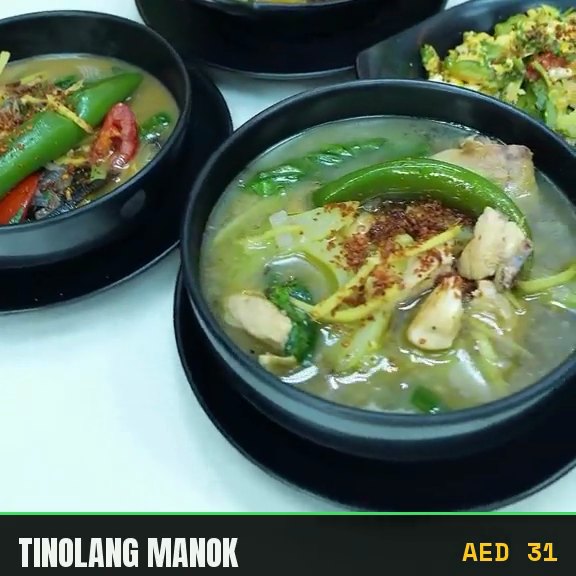 Tinolang Manok: Filipino Ginger Chicken SoupTinolang manok is chicken simmered in a clear broth built on ginger, garlic and onion, with a green vegetable and leaves added at the end. It is AED 31 at Pinoy Tambayan, the cheapest of the nine soup rows on the menu, and the dish Filipino households cook when somebody is unwell.
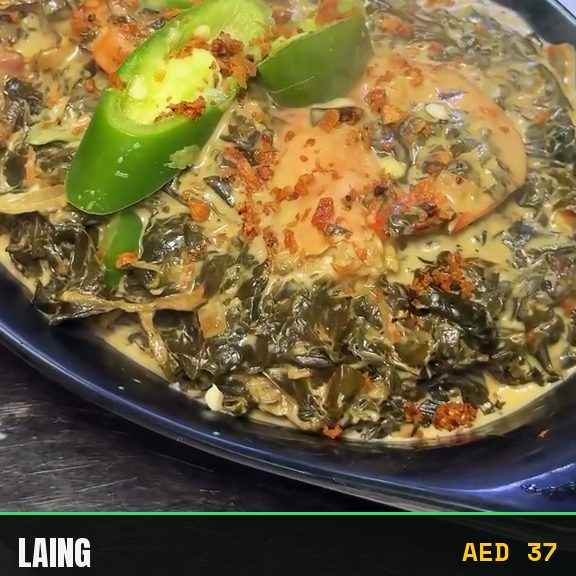 Laing: The Filipino Taro Leaf Dish From BicolLaing is dried taro leaves simmered in coconut milk with chilli and ginger until the sauce thickens, a Bicol dish that costs AED 37 at Pinoy Tambayan. It is one of nine vegetable rows on the menu and one of the few named by diners in their own reviews.
 Filipino Desserts at Pinoy Tambayan: Ube Halaya to Leche FlanPinoy Tambayan keeps six desserts on the printed menu at Al Barsha, from a five-dirham ice cream cone to a nineteen-dirham leche flan, plus halo halo as a seventh on its own guide. Every price and dish name below comes straight off the menu, not a guess.
Hungry now?
Open daily, 9:00 AM to 1:00 AM. No pork is served at Pinoy Tambayan. Free delivery within 5 km, AED 5 beyond, and no minimum order.
Order seafood on WhatsApp +971 4 328 2669 Book a table Get directions