
Dish guide ·
Tinolang Manok: Filipino Ginger Chicken Soup
Tinolang manok is chicken simmered in a clear broth built on ginger, garlic and onion, with a green vegetable and leaves added at the end. It is AED 31 at Pinoy Tambayan, the cheapest of the nine soup rows on the menu, and the dish Filipino households cook when somebody is unwell.
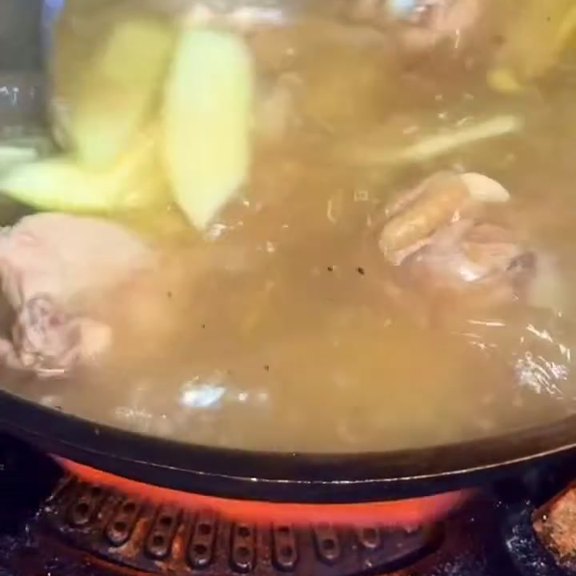
Tinolang manok is a Filipino soup of chicken simmered in a clear broth built on ginger, garlic and onion, with a firm green vegetable added partway and leaves stirred in at the end. At Pinoy Tambayan in Al Barsha 1, Dubai, it is the first row of the Sabaw at Sinigang group on the main menu at AED 31, which makes it the least expensive of the nine soups we cook.
Ginger is the dish, not a garnish
Every Filipino soup has a spine, and tinola's is luya, ginger. The ginger goes into hot oil with garlic and onion before any liquid does, so the broth is built on it rather than flavoured with it afterwards. That is the single difference between tinola and the chicken soup most people grew up with elsewhere. There is no thickening, no cream, no roux and no stock cube standing in for time. What you taste is chicken, ginger and fish sauce, and the broth stays thin enough to drink straight from the spoon.
What is actually in the bowl
Ours arrives as bone-in chicken pieces in a pale gold broth, with ginger cut into fine strips rather than crushed, a whole siling haba laid across the top, green leaves through the liquid and toasted garlic scattered over. The long green chilli is the one thing to notice before you start. It sits on the surface, so it can be lifted straight out for anyone who does not want it, and it can be pressed against the side of the bowl by anyone who does.
Green papaya or sayote, and why cooks argue about it
The firm vegetable in tinola is traditionally green papaya, cut into wedges and dropped in while the chicken is still simmering so it softens without collapsing. Sayote, chayote, is the common substitute and is standard in a lot of households now. Neither is wrong. Green papaya goes slightly slippery and takes on the broth; sayote stays firmer and tastes cleaner. The leaves are the second argument: dahon ng sili, chilli leaves, are the classic finish, and malunggay, moringa, is the one most families reach for instead. Whatever goes in, it goes in at the very end, because a leaf boiled for ten minutes is a lost leaf.
It is not sinigang, and it is not bulalo
Three of our soups get confused with each other by people reading the menu for the first time, and the difference is easy to hold once. Tinola is a ginger broth and is not sour. Sinigang is built on a souring agent, usually tamarind, and the sourness is the entire point of it. Bulalo is a long beef bone broth, rich with marrow rather than aromatic, and ours is priced at AED 51 because it is portioned for two.
- Tinolang manok, AED 31. Clear, gingery, chicken on the bone. The lightest soup we serve.
- Sinigang, AED 47 to AED 53 depending on whether you take shrimp, milkfish, tanigue or beef. Sour, tamarind led, named in more of our Google reviews than any other soup.
- Bulalo, AED 51. Beef shank and marrow, heavy, meant to be shared.
- Papaitan, AED 39, and Beef Kansi, AED 51. The two most regional soups on the list, and the two first timers should work up to rather than start with.
The soup Filipinos cook when somebody is ill
Ask any Filipino what their mother made when they had a fever and a large share will say tinola. The reasoning is practical rather than medicinal. It is hot, it is thin enough to get down when nothing else will, the ginger clears the head slightly, and a bowl of it carries chicken, vegetable and broth in a form that needs no chewing to speak of. This is a genuine cultural fact rather than a health claim, and it is worth stating plainly: tinola is comfort food with a job, and nobody at this restaurant is going to tell you it cures anything.
Tinola is in the first Filipino novel
There is a scene in Jose Rizal's Noli Me Tangere, published in 1887, where a pot of tinola is served at a dinner party and the friar Padre Damaso is handed the neck and the wing while another guest receives the thigh. Filipino schoolchildren study that chapter, and the joke lands because everybody in the room understands exactly what a cut of chicken means when a pot is shared out. It is the reason a Filipino reads a bowl of tinola as a social object rather than just soup, and it is a small piece of evidence that this dish has been on Philippine tables for well over a century.
What it costs and what comes with it
Tinolang manok is AED 31 and every main dish here comes with one free rice, which matters more for tinola than for almost anything else we cook. This is a soup eaten over rice, not beside it: the broth is spooned onto the plate and the rice absorbs it. Extra rice is a separate row, plain at AED 6 and garlic at AED 8, and a table sharing one pot of tinola will usually need the extra before the chicken runs out.
What Filipinos order with it
- Something fried and salty. A clear broth wants a hard contrast beside it, and a whole fried fish or crisp chicken skin does that better than a second soup.
- The other get-well dishes. Arroz caldo at AED 25 and goto at AED 27 are the rice porridge versions of the same idea, both marked as best sellers on our printed menu.
- Rice, and then more rice. See above. This is not a joke about appetite, it is how the dish is eaten.
- Nothing sweet until afterwards. Tinola is the one soup where a strong dessert straight after it tastes wrong, which is why halo halo tends to come much later in the evening.
How well it travels
Soup is the honest test of a delivery kitchen, because there is nothing crisp to lose but plenty of heat. Tinola holds up because the broth is thin and the chicken is on the bone, and bone holds temperature far longer than a fillet does. Send the order on WhatsApp and the kitchen normally plates in 10 to 15 minutes, closer to 30 at peak, with riders running from 11:30 in the morning to 10:30 at night. Delivery is free within 5 km of Al Barsha 1 and AED 5 beyond, with no minimum order.
Tinola for thirty people
On a large spread tinola does a job nothing else on the table does, which is to give people something hot and light to return to after an hour of fried food and rice. It also survives sitting in a warmer better than anything crisp, and it is one of the cheaper ways to add a genuine cooked dish rather than a filler. Catering starts at AED 49 a head with a minimum of thirty people, and a soup course is the part of a Filipino party spread that most people forget to plan for.
Chicken across the rest of the menu
Tinola is one of several ways this kitchen cooks chicken, and the four below are the ones people move on to. Adobong manok at AED 27 is the vinegar and soy braise. Chicken sisig at AED 35 arrives sizzling on iron. Grilled chicken Filipino style, which is inasal, is AED 39 whole and AED 23 for a half. Chicken pinaputok at AED 43 is the stuffed and wrapped version. No pork is served at Pinoy Tambayan, which is why the chicken section of this menu is longer than it would be at most Filipino restaurants.
Tinola questions we get asked
What is tinolang manok?
A Filipino soup of chicken simmered in a clear broth of ginger, garlic and onion, with a firm green vegetable such as green papaya or sayote and leafy greens added at the end. It is seasoned with fish sauce rather than thickened.
Is tinola spicy?
No. A whole long green chilli, siling haba, sits on top of the bowl and gives a mild warmth to the broth. It can be lifted out before anyone eats, or crushed into the soup by whoever wants it.
What is the difference between tinola and sinigang?
Tinola is a ginger broth and is not sour. Sinigang is built on a souring agent, usually tamarind, and tastes sharply sour by design. They are not variations of one soup.
How much is tinolang manok, and does it come with rice?
AED 31, and every main dish comes with one free rice. Plain rice at AED 6 and garlic rice at AED 8 are separate rows if the table wants extra, which with tinola it usually does.
Why do Filipinos eat tinola when they are sick?
Because it is hot, thin and easy to get down, and the ginger clears the head a little. It is the household comfort soup rather than a remedy, and no medical claim is being made for it here.
Is there pork in tinola?
No. Tinolang manok is a chicken dish, and no pork is served at Pinoy Tambayan at all.
Which vegetable is in your tinola, papaya or sayote?
Green papaya is the traditional one and sayote is the common substitute, and Filipino households are split between them. Ask when you order if it matters to you, and the kitchen will tell you what is in the pot that day.
Does tinola survive delivery?
Yes, better than most soups. The chicken is on the bone and bone holds heat, so it arrives hot. Delivery is free within 5 km of Al Barsha 1 and AED 5 beyond, with no minimum order.
We are opposite Dubai International Academy in Al Barsha 1, open 9:00 AM to 1:00 AM every day, rated 4.5 on Google. Order tinolang manok with extra rice, and eat the broth over it rather than beside it.
More from the Dining Guide
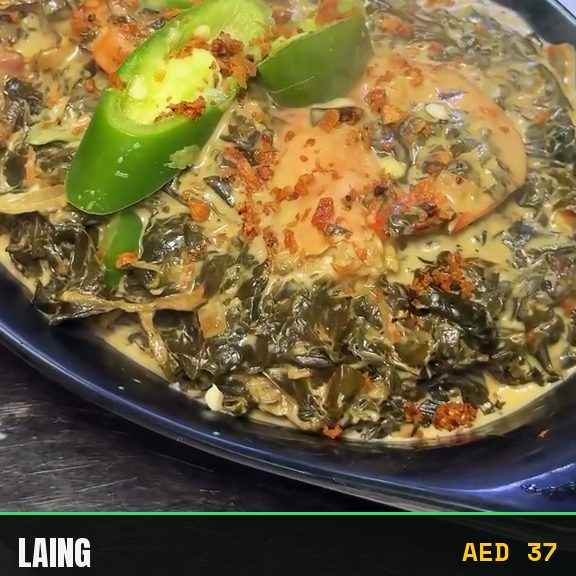 Laing: The Filipino Taro Leaf Dish From BicolLaing is dried taro leaves simmered in coconut milk with chilli and ginger until the sauce thickens, a Bicol dish that costs AED 37 at Pinoy Tambayan. It is one of nine vegetable rows on the menu and one of the few named by diners in their own reviews.
 Filipino Desserts at Pinoy Tambayan: Ube Halaya to Leche FlanPinoy Tambayan keeps six desserts on the printed menu at Al Barsha, from a five-dirham ice cream cone to a nineteen-dirham leche flan, plus halo halo as a seventh on its own guide. Every price and dish name below comes straight off the menu, not a guess.
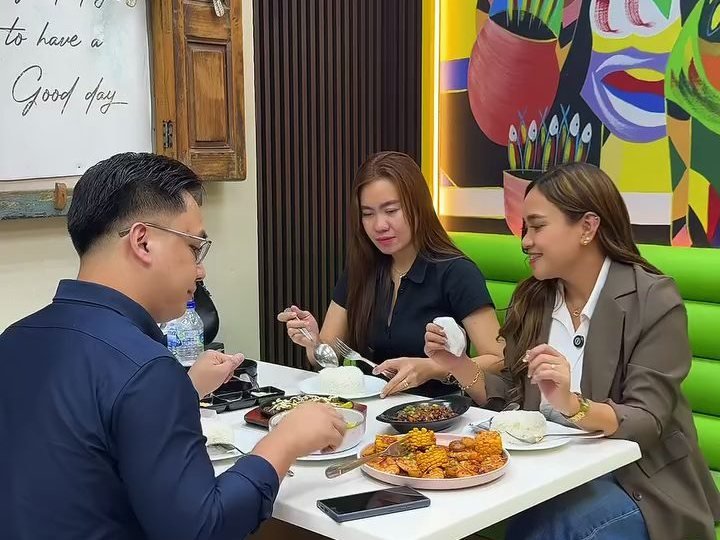 What Tambayan Means, and How to Find the Right Pinoy TambayanTambayan is Tagalog for a hangout, a place a group keeps returning to. There is more than one Pinoy Tambayan in Dubai and more than one thing online carrying the name, so here is what the word means and how to reach the one in Al Barsha.
Hungry now?
Open daily, 9:00 AM to 1:00 AM. No pork is served at Pinoy Tambayan. Free delivery within 5 km, AED 5 beyond, and no minimum order.
Order tinolang manok on WhatsApp +971 4 328 2669 Book a table Get directions