
Dish guide ·
Sisig Explained: Why It Arrives Still Sizzling
Sisig is chopped meat seasoned with calamansi and chilli, served on a cast iron plate straight off the fire. Four versions on our menu in Al Barsha, Dubai.
Sisig is chopped meat, seasoned sharp with calamansi and chilli, served on a cast iron plate that reaches the table still spitting. The plate is the cooking vessel rather than a serving dish, which is why the edges keep crisping while you eat. Ours comes with an egg on top that you stir through in the first ten seconds, while the iron is still hot enough to cook it.
Where sisig comes from
The dish belongs to Pampanga, the province north of Manila that Filipinos call the culinary capital of the country. The word sisig originally described sour snacking, food eaten with vinegar or calamansi rather than a specific recipe. The sizzling version spread from Angeles City and travelled wherever Filipinos went, which is why you can now eat it 7,000 kilometres from Pampanga, opposite Dubai International Academy in Al Barsha 1.
Why the cast iron matters
A sizzling plate is not theatre for its own sake. The iron holds heat long past the kitchen, so the meat touching it keeps browning at the table while the meat above stays soft. That contrast, crisp underneath and tender on top, is the texture people are actually ordering. It also means the dish changes while you eat it, which is why sisig is served the moment it leaves the fire rather than plated and left to wait.
The four sisig on our menu
No pork is served at Pinoy Tambayan. Ours is built on beef, chicken, tofu and bulalo instead, and nine of our Google reviewers mention the beef sisig by name, which is the honest measure of which one the room orders.
Which of the four to order
- Beef sisig if it is your first. It is the version our reviewers name, and the one the kitchen builds everything else around.
- Chicken sisig if you want the same texture with less iron in the flavour. It is the milder plate of the four.
- Tofu sisig if anyone at the table does not eat meat. It is the only sisig here not built on it, and it still arrives sizzling.
- Bulalo sisig if you already know sisig. It is built on beef shank, so it eats richer and heavier than the rest.
How to eat it
- Break the egg into the meat the moment it lands and stir while the plate is still angry. The residual heat cooks it.
- Squeeze the calamansi over the top before the first bite, not after. Acid on hot fat is the whole point of the dish.
- It is rice food. Every main comes with one free rice, and sisig is the reason that rule exists.
- Say the word when you send your order if you want it milder or with more chilli. The kitchen adjusts before it hits the plate.
Sisig for one, or for the whole table
The sizzling plates are built for sharing over rice, but the solo versions come as a complete set with rice and a drink, and both carry best seller marks on our printed menu.
If you are feeding a group and want that arrival moment repeated down the length of a table, the boodle fight is the same idea at full scale, eaten with your hands off banana leaves.
What to drink with it
Iced tea, which is what most tables order, or a cold soft drink. Sisig is salty, sour and fatty in the same mouthful, so the job of the drink is to reset your palate rather than to add another flavour. Coffee is a Filipino answer too, and there is black coffee on the menu at any hour we are open, which for a sizzling plate at midnight is less strange than it sounds.
Sisig on a payday weekend
Sisig is the plate a lot of Filipino tables order to mark an occasion rather than just fill a seat, the classic order the moment a payslip lands and someone decides the table is celebrating. Our guide to how Filipinos in Dubai spend sweldo weekend covers what else regularly makes that table, sisig included.
If you are taking it home
- The cast iron does not travel. Delivery sisig arrives in a container, which means it arrives hot rather than sizzling, and that is the honest difference between eating in and eating at home.
- Reheat it in a dry pan on high heat, not in a microwave. You are trying to get the crisp edges back, and a microwave does the opposite.
- Add the calamansi after reheating, never before. Acid boiled twice goes flat and bitter.
- If you want the plate itself, that is a dine-in dish. We are open 9:00 AM to 1:00 AM every day in Al Barsha 1.
Ordering sisig for a table
One sizzling plate feeds two people who are also eating something else, and three or four if it is one of several dishes on the table. For a bigger group the arithmetic changes: order two different sisig rather than two of the same, because the point of four versions on one menu is that the table can compare them. If one of the two is Bulalo Sisig, it starts from the same beef shank as the bulalo soup, sent out sizzling instead of in broth.
Sisig questions we get asked
Is sisig spicy?
It is seasoned with chilli rather than built on it, so the heat sits behind the calamansi and the onion. Tell us when you order and the kitchen will make it milder or hotter.
Does your sisig contain pork?
No pork is served at Pinoy Tambayan. Our four sisig are built on beef, chicken, tofu and bulalo.
What comes with a sisig?
Every main dish comes with one free rice. The solo sisig combos come as a full set with rice and a drink.
Can I get sisig delivered in Al Barsha?
Yes. Our riders run 11:30 in the morning to 10:30 at night, delivery is free within 5 km and AED 5 beyond, with no minimum order. Send the order on WhatsApp and we confirm before the kitchen starts.
Do you serve sisig all day?
Yes. The kitchen runs from 9:00 in the morning until 1:00 at night, so a sizzling plate after a late shift is a normal order here.
We are opposite Dubai International Academy in Al Barsha 1, rated 4.5 on Google, and you can walk in any day between 9:00 AM and 1:00 AM. Sisig is the plate we would put in front of anyone who says they have never tried Filipino food.
Straight from our Google reviews
“Convenience:Perfect for takeout or dine-in, making it easy to enjoy their delicious food anytime. Must-Try Dishes: Chicken Sisig: Crispy and flavorful, a true Filipino favorite.”
“I highly recommend Pinoy Tambayan. I had the pleasure of enjoying my favorite dish, beef sisig, which I often order. The service was excellent, and the ambiance contributed to a pleasant dining experience.”
Copied word for word. Read all 558 five-star reviews
More from the Dining Guide
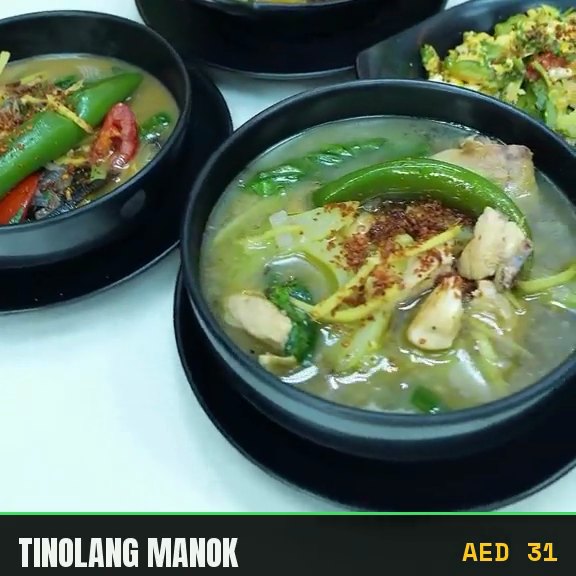 Tinolang Manok: Filipino Ginger Chicken SoupTinolang manok is chicken simmered in a clear broth built on ginger, garlic and onion, with a green vegetable and leaves added at the end. It is AED 31 at Pinoy Tambayan, the cheapest of the nine soup rows on the menu, and the dish Filipino households cook when somebody is unwell.
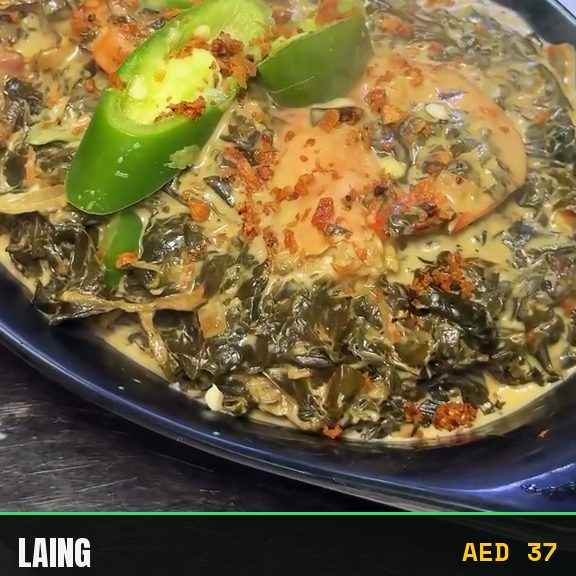 Laing: The Filipino Taro Leaf Dish From BicolLaing is dried taro leaves simmered in coconut milk with chilli and ginger until the sauce thickens, a Bicol dish that costs AED 37 at Pinoy Tambayan. It is one of nine vegetable rows on the menu and one of the few named by diners in their own reviews.
 Filipino Desserts at Pinoy Tambayan: Ube Halaya to Leche FlanPinoy Tambayan keeps six desserts on the printed menu at Al Barsha, from a five-dirham ice cream cone to a nineteen-dirham leche flan, plus halo halo as a seventh on its own guide. Every price and dish name below comes straight off the menu, not a guess.
Hungry now?
Open daily, 9:00 AM to 1:00 AM. No pork is served at Pinoy Tambayan. Free delivery within 5 km, AED 5 beyond, and no minimum order.
Order sisig on WhatsApp +971 4 328 2669 Book a table Get directions